The Moore Market Letter - August 2026 Issue
Out to Auction
The $552 Million Reset
What happened to Aspen’s trophy inventory around the Koch auction?
The most interesting part of the Koch auction may not be the sale price itself. It may be what happened to the rest of Aspen’s trophy inventory around it.
The estate had once been offered for $125 million and was most recently listed for $99 million. It ultimately closed for approximately $37.8 million, including the buyer’s premium.
I would not use that result as a direct comparable for every trophy home in Aspen. The property was unusual, and an auction is different from a traditional sale. But buyers did not need to consider it a perfect comparable for it to change how they viewed other asking prices.
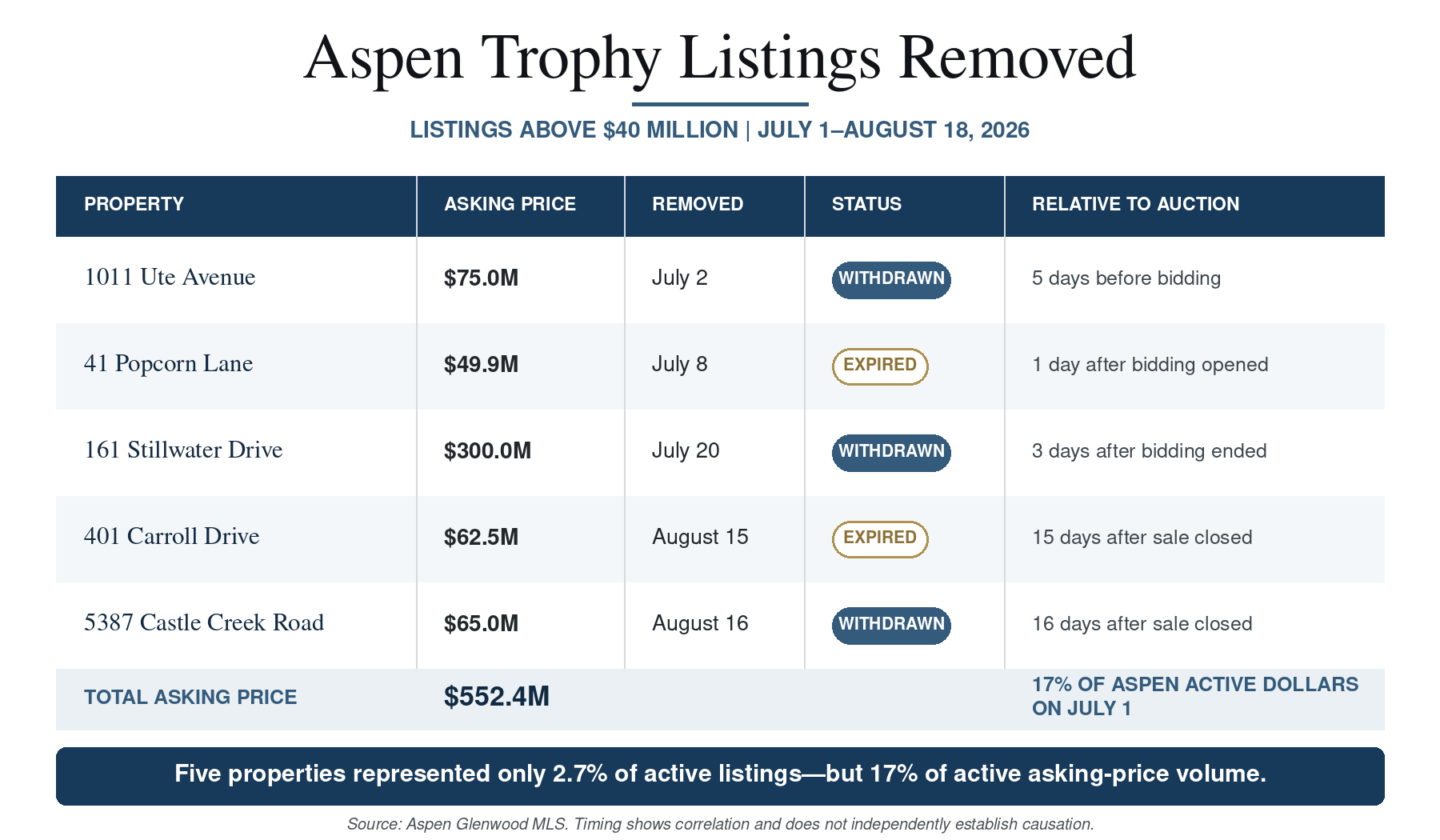
The auction became public on May 27, more than a month before bidding opened. Between July 1 and August 18, the following five Aspen listings priced above $40 million were withdrawn or allowed to expire (see figure).
“James brings significant real estate sales experience, development expertise, and disciplined underwriting insight across Aspen, Snowmass, and the greater Roaring Fork Valley real estate market.”

These five properties represented approximately 17% of Aspen’s active asking-price volume on July 1, even though they accounted for only 2.7% of the listings.
The timing is notable. Ute Avenue was withdrawn five days before bidding opened. Popcorn Lane expired one day after bidding began. Stillwater was withdrawn three days after the auction ended, while Carroll Drive and Castle Creek Road came off after the Koch sale closed.
That does not prove the auction caused all five removals. Two were expirations, which could have been scheduled well in advance, and every seller had their own reasons. What we can say is that all five occurred after the auction was public and while the market was watching a highly visible test of trophy-property demand.
To me, that is the more important point. At this level, one sale does not have to establish a new comparable to influence the market. It only has to change buyers’ perception of what sellers may ultimately accept.
If buyers believe asking prices have moved ahead of demonstrated demand, they have little reason to rush. They wait, negotiate harder and see whether sellers adjust. Trophy owners, meanwhile, often have the ability to withdraw rather than accept a lower price. That means a shift can begin without immediately appearing in closed-sale statistics.
In fact, removing these properties could make Aspen’s available inventory look tighter while buyer leverage is actually increasing. Fewer listings do not necessarily mean stronger demand—particularly when the missing inventory consists of the market’s most ambitious asking prices.
The Koch auction did not establish the value of every trophy property in Aspen. It may, however, have reset the conversation around value. The next indication will be whether these properties return to the market and, more importantly, at what prices.
Analysis based on Aspen MLS listing and status data through August 18, 2026. Asking prices are not appraised values, and the timing of these events does not independently establish causation.
Monthly market data and forecasting letter.
Objective Numbers.
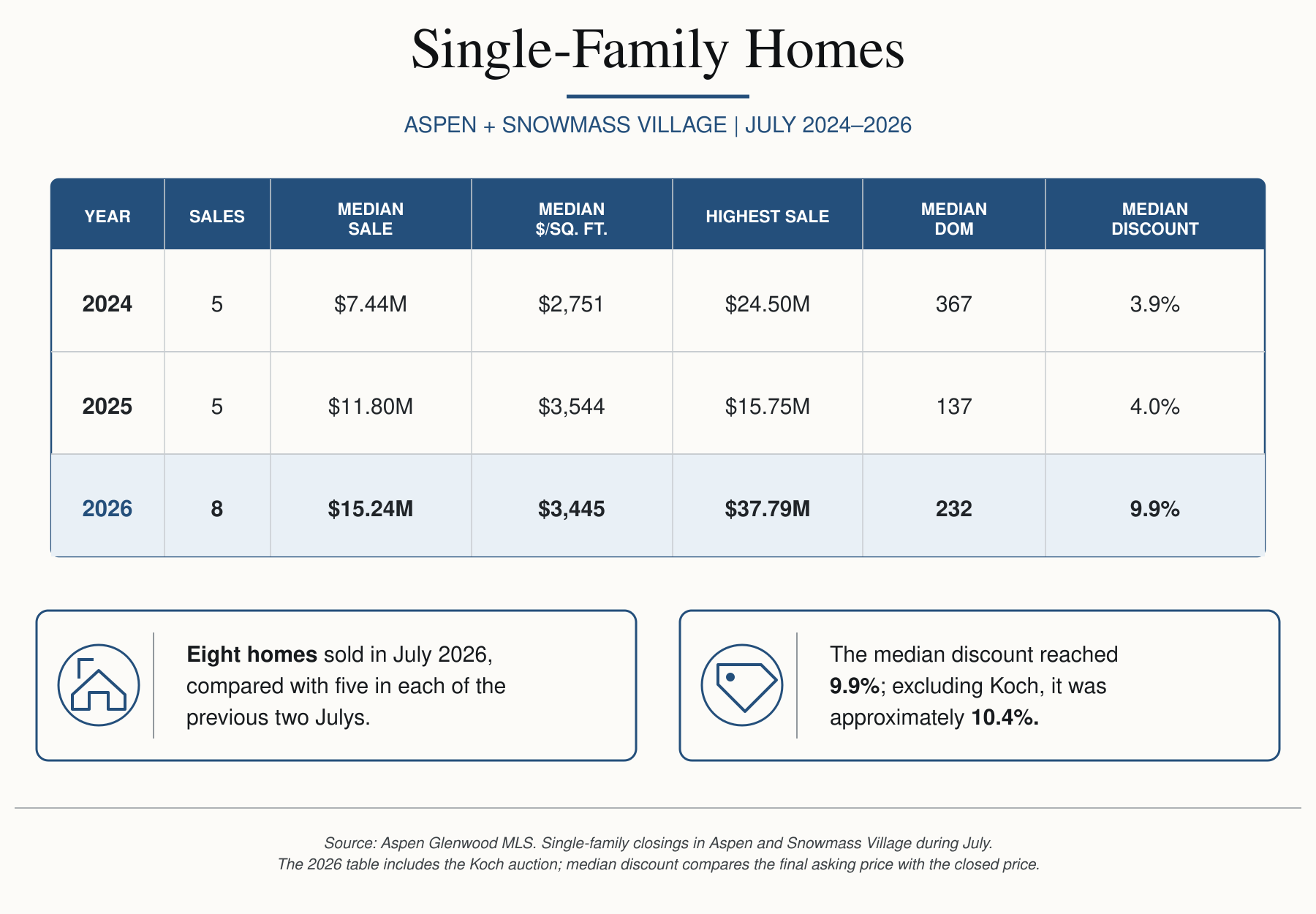
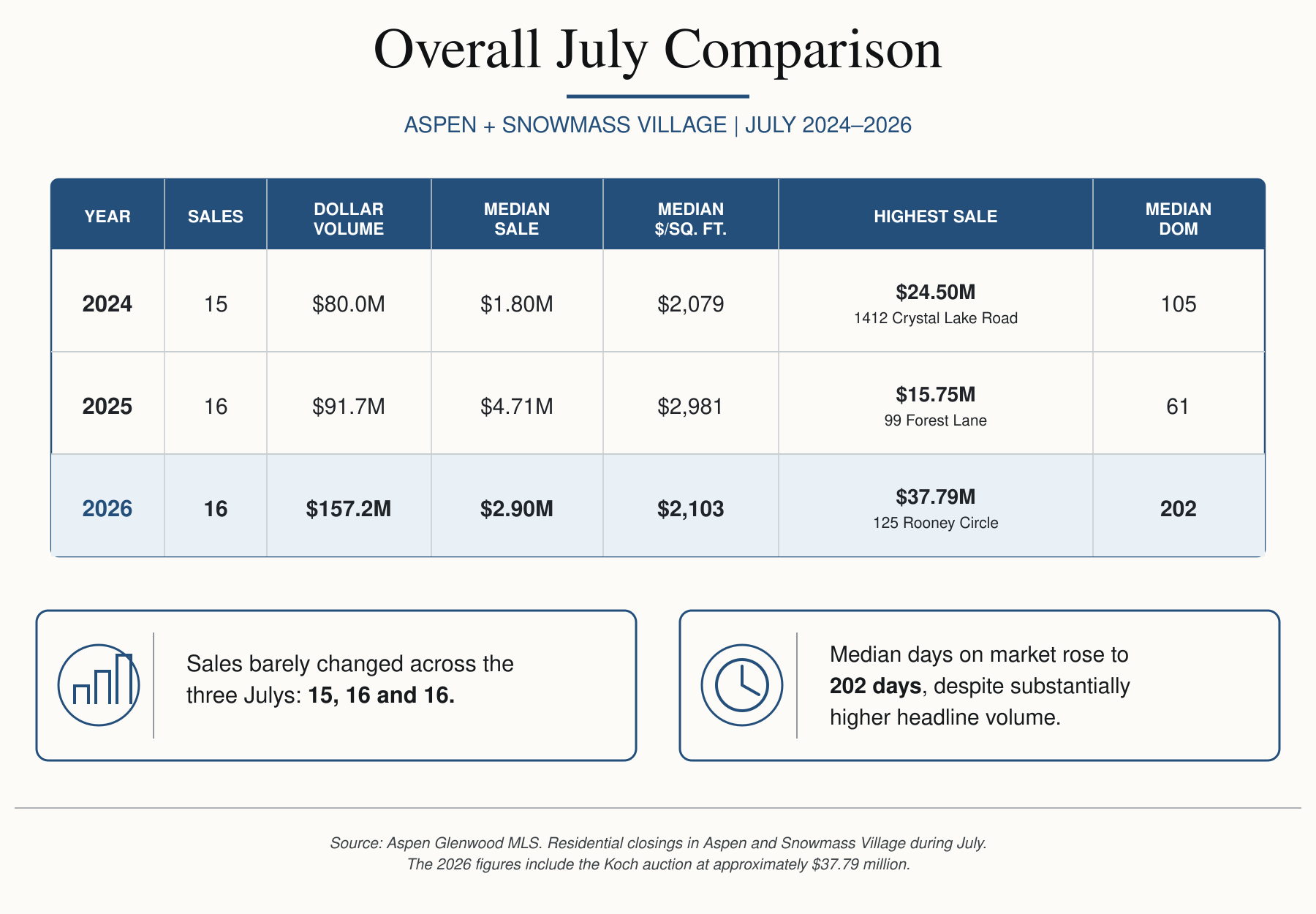
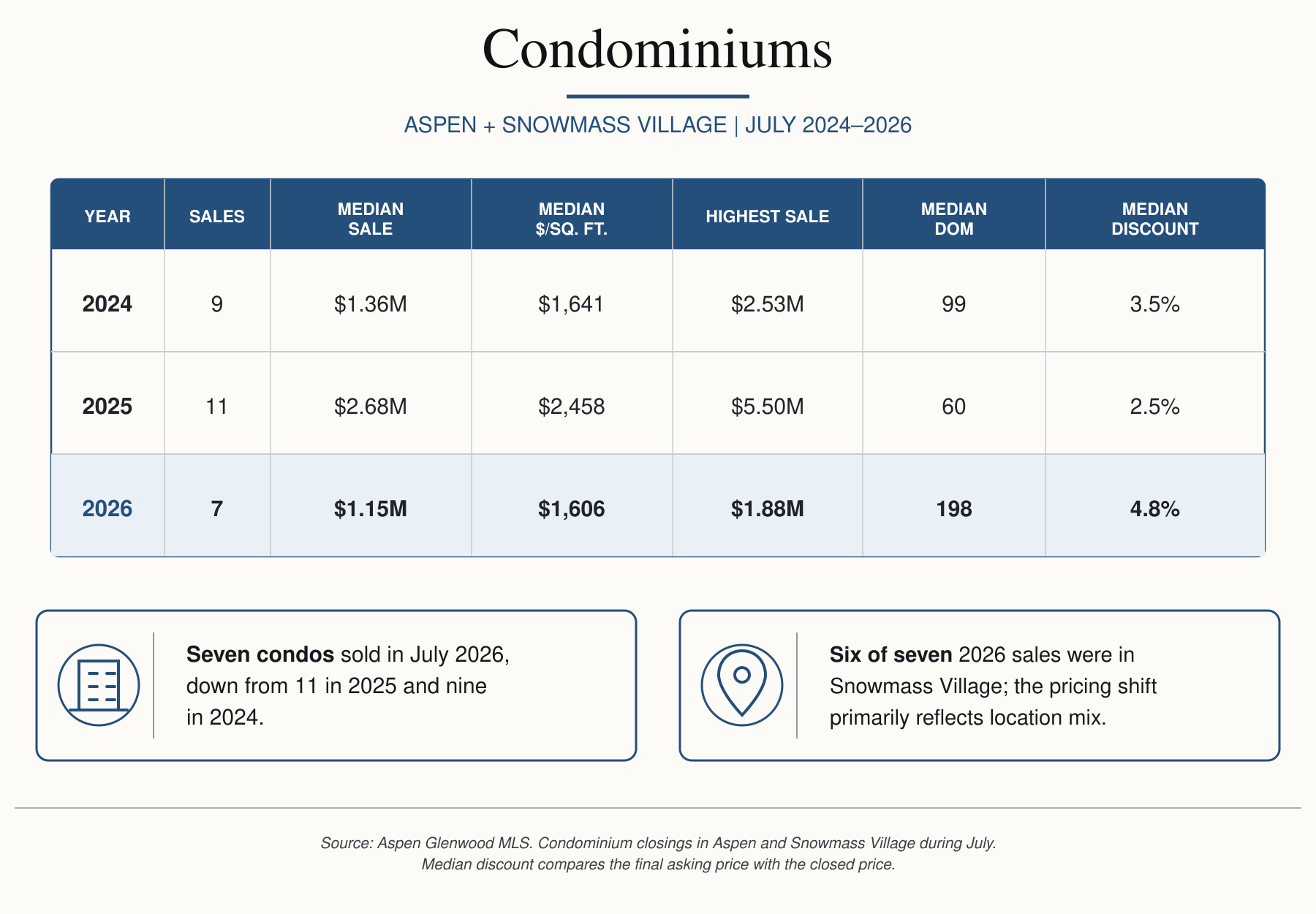
The July Numbers, by Property Type
Appreciation
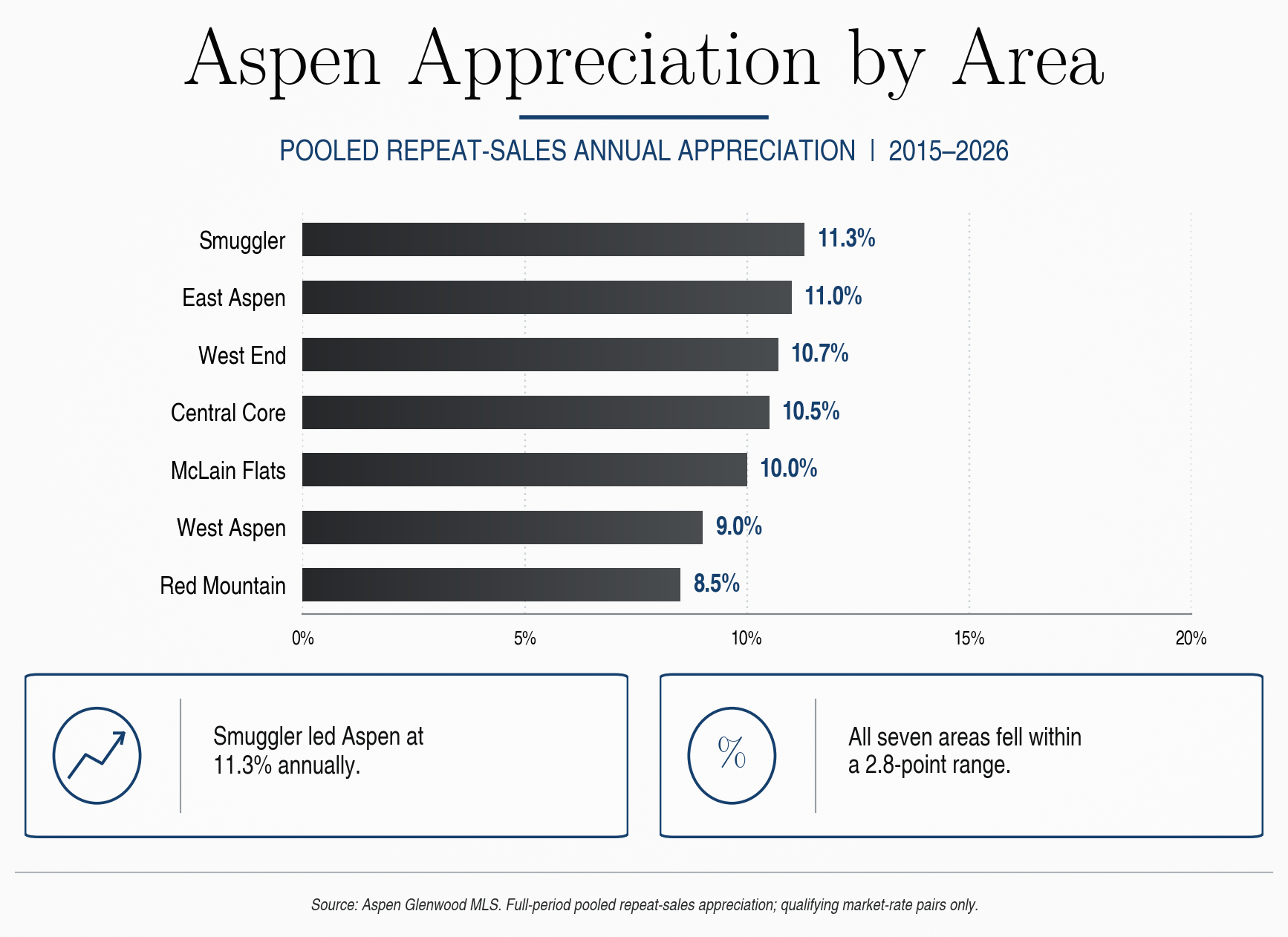
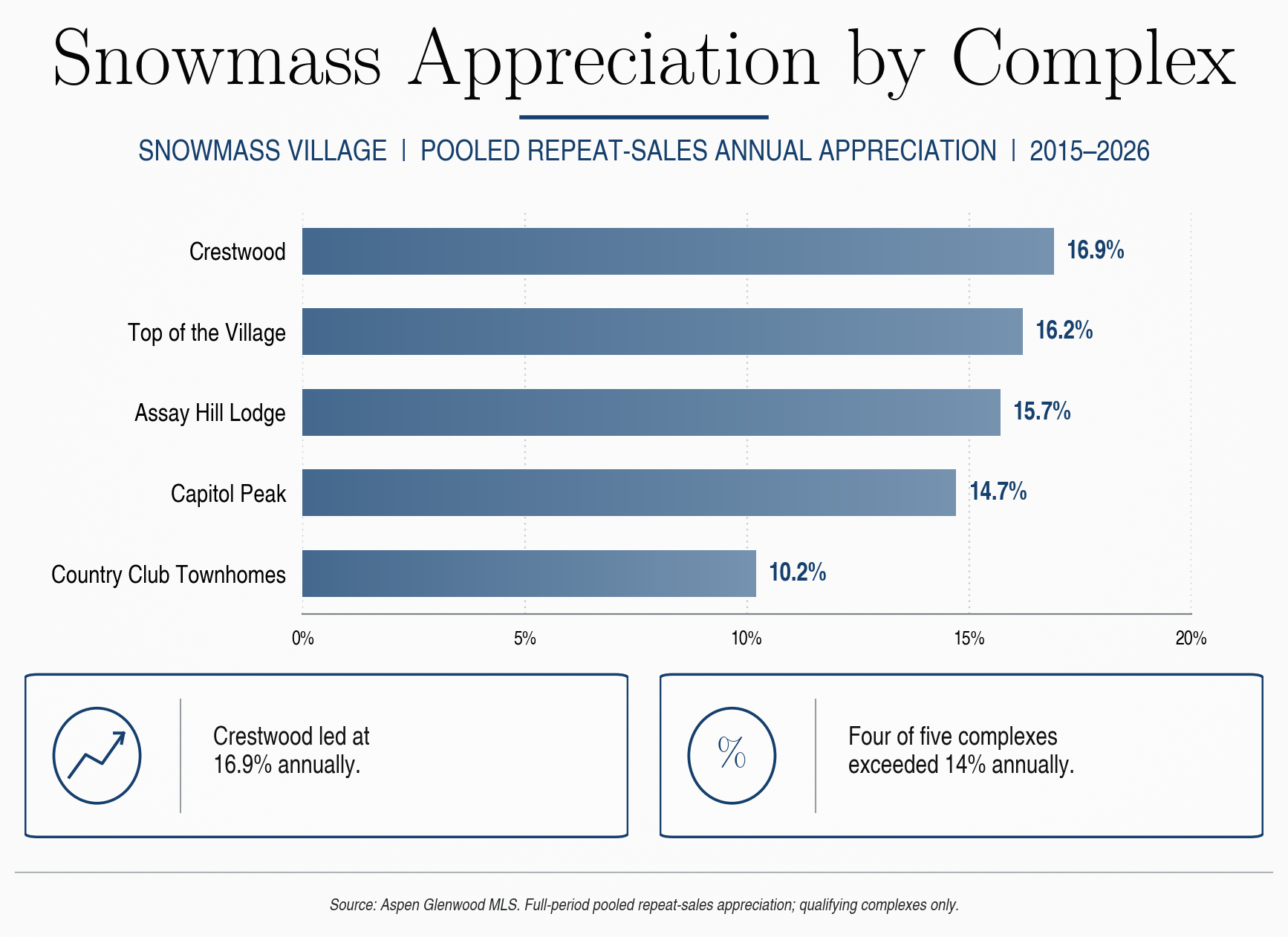
Within Aspen, appreciation was relatively consistent across the major areas, generally ranging from approximately 8.5% to 11.3% annually. Snowmass Village showed considerably greater variation between individual condominium developments, with several established ski-access complexes appreciating at annual rates above 15%.
The comparison reinforces the broader conclusion: Snowmass Village’s outperformance was driven in meaningful part by buyers recognizing the relative value of its individual condominium complexes, particularly those offering direct or convenient ski access.